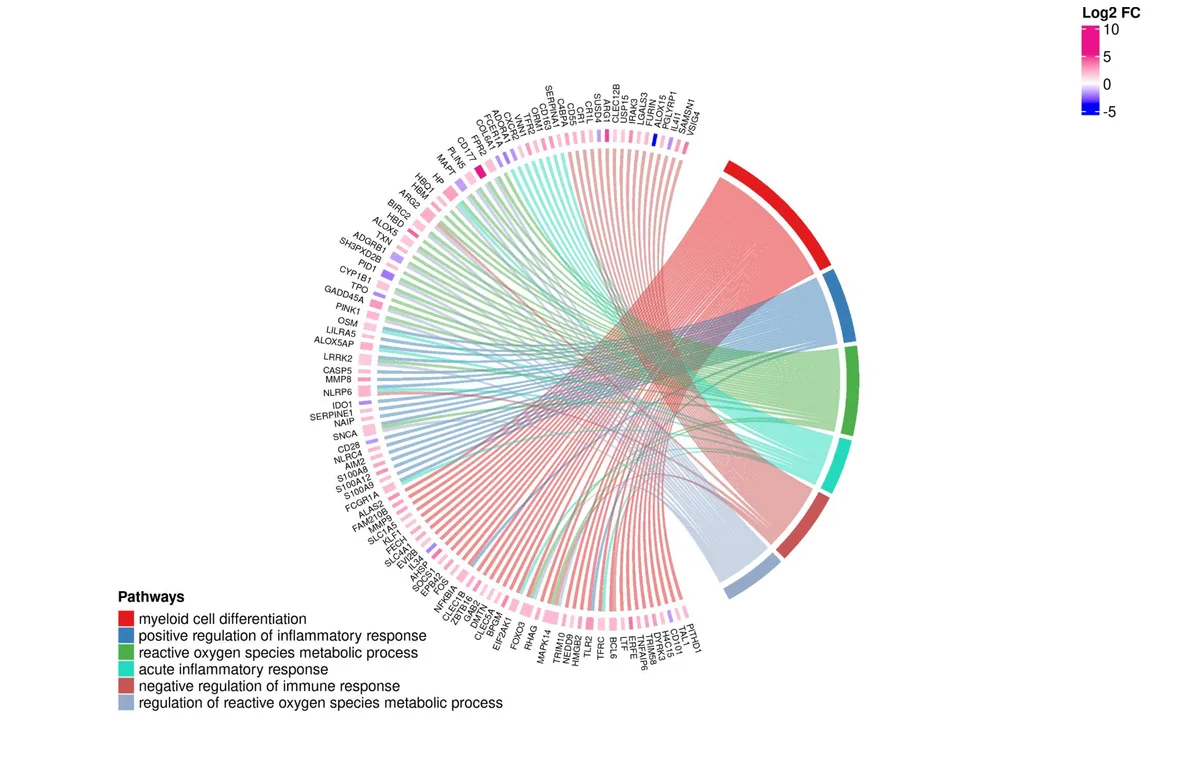
High-altitude environments serve as a natural laboratory for studying physiological and pathophysiological responses to hypobaric hypoxia. The lab uses genomics, transcriptomics, targeted proteomics, and global DNA methylation analysis to deepen understanding of hypobaric hypoxia in health and disease.
Multi-omicsHypoxiaHigh altitude
Integrative Multi-Omics Approaches to Map Adaptive and Maladaptive Biological Signatures at High Altitude
02
Cell-Free DNA Fragmentomics
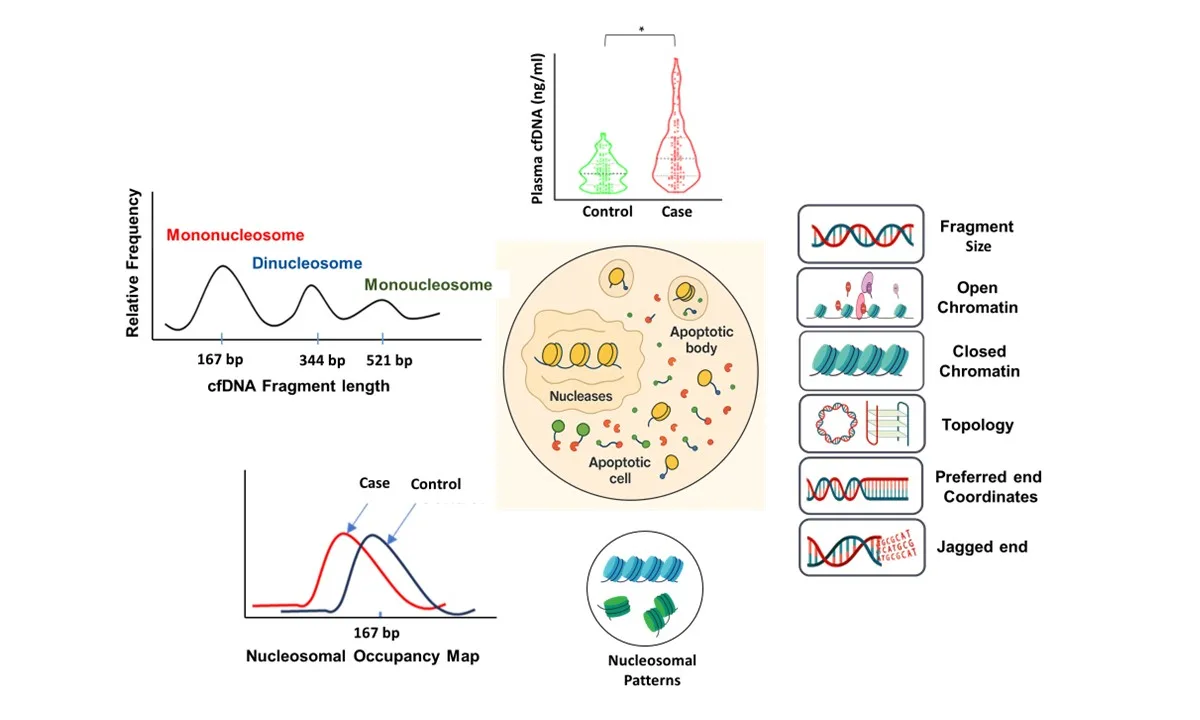
Fragmentomics profiling of circulating cell-free DNA offers a non-invasive approach to monitoring chromatin accessibility, genome dynamics, and disease-related biomarkers. The laboratory analyses fragment characteristics including chromatin topology, fragment size distribution, end motif patterns, and tissue-specific signatures.
cfDNAFragmentomicsChromatin
Circulating cell-free DNA Fragmentomics: A non-invasive method for high-resolution biological signals
03
Cardiovascular Genetics
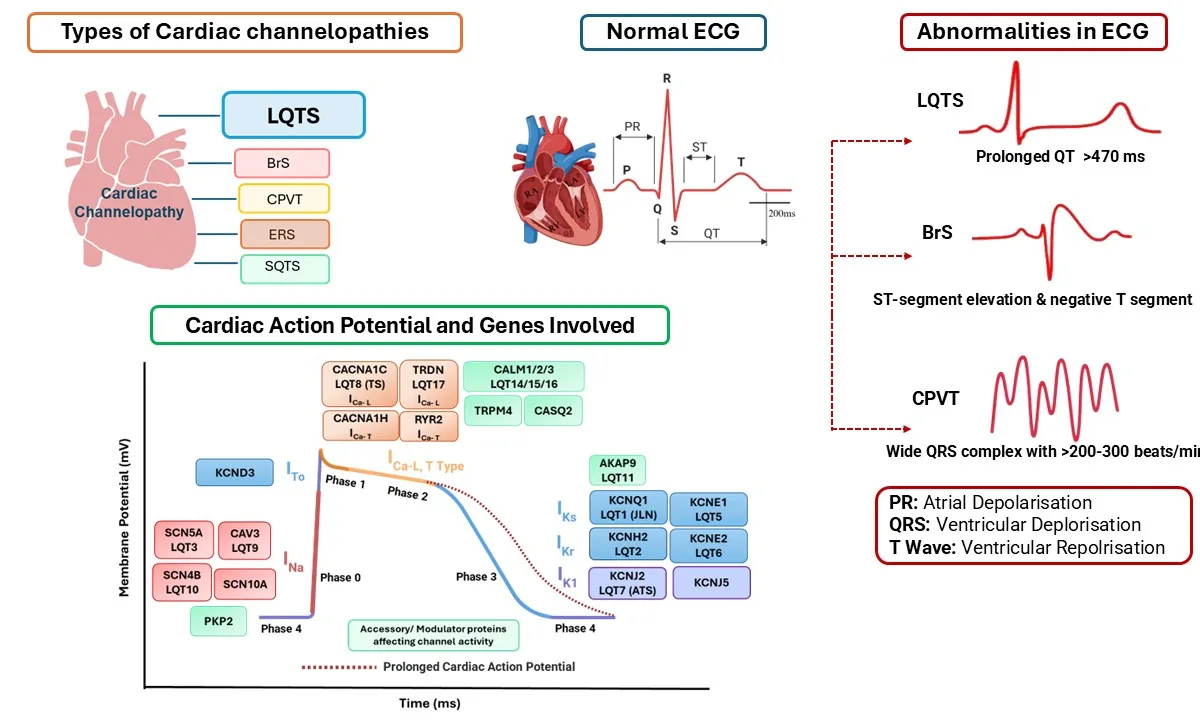
The lab focuses on genetic contributors to cardiovascular diseases, including cardiac channelopathies associated with sudden cardiac death. Its work includes establishing genotype-phenotype correlations and identifying variants relevant to the Indian population.
Cardiovascular diseaseGeneticsGenotype-phenotype
Decoding the Genetics of Cardiovascular Diseases: From Discovery to Beyond
04
Therapeutic Hypoxia
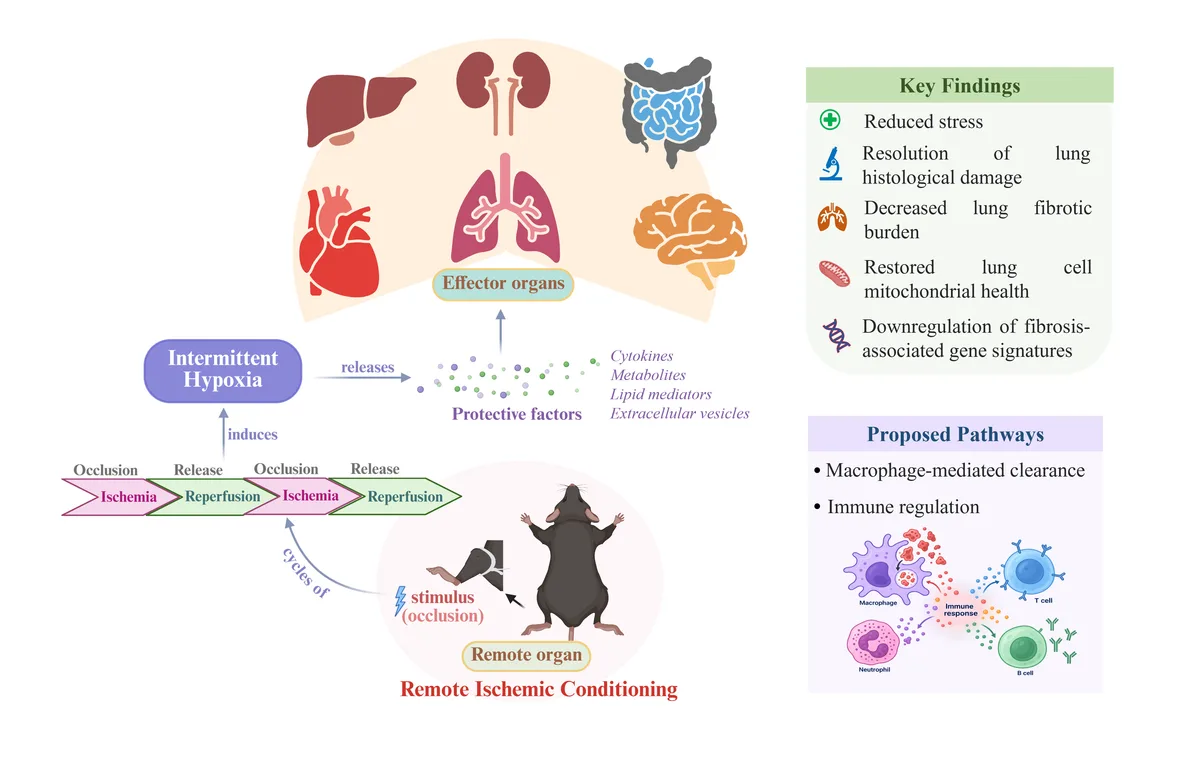
There is a growing recognition that intermittent hypoxia can be beneficial by enhancing cardiopulmonary health and improving overall oxygenation capacity. However, translational aspects of these findings remain challenging, as cellular responses to hypoxia involve complex signaling pathways. Animal models have played a key role in understanding the beneficial effects of intermittent hypoxic exposure in complications, such as stroke and cardiorespiratory disorders, that can be extrapolated to humans; however, the protocol for this approach needs to be properly standardized before being implemented in human subjects. Our laboratory attempts to standardize protocols in murine models receiving such therapeutic hypoxic exposures that can further their clinical application in normobaric hypoxic disorders.
Intermittent hypoxiaExperimental modelsProtocols
Using hypoxia as a therapeutic approach in experimental settings
People
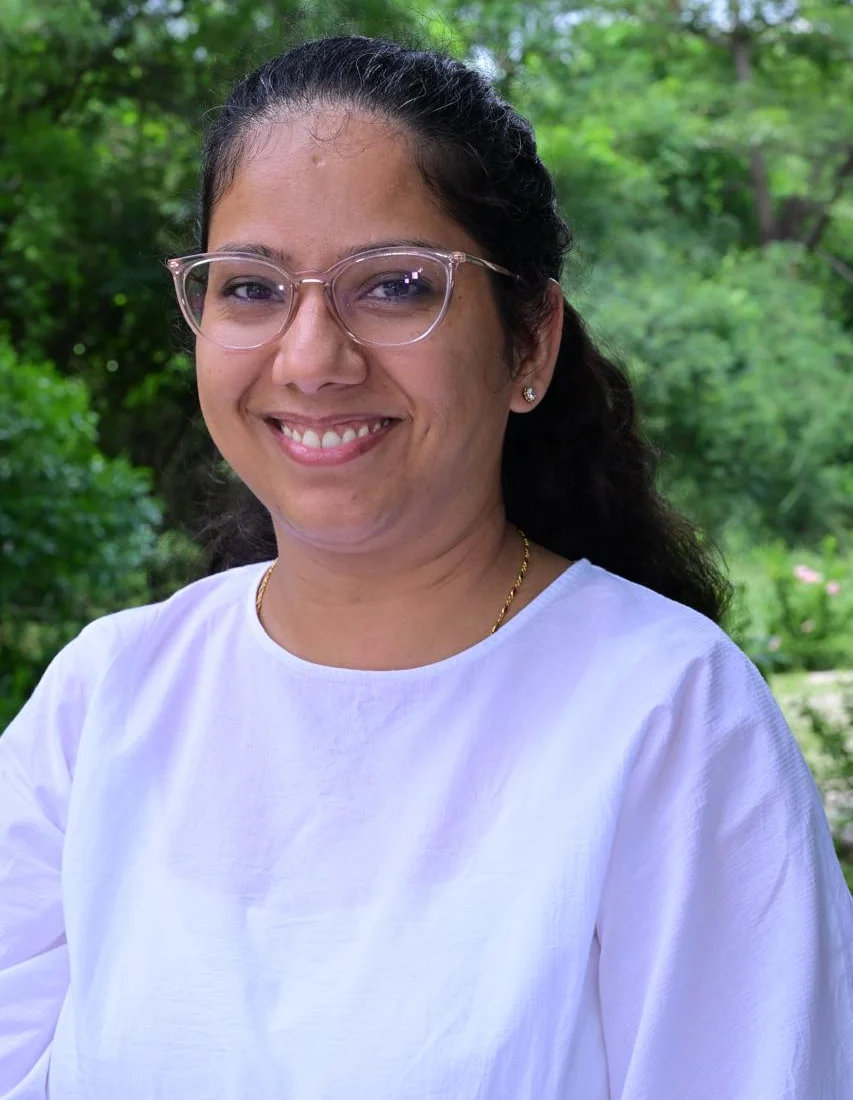
Dr. Aastha Mishra
Principal Investigator
Senior Scientist at the CSIR-Institute of Genomics and Integrative Biology (IGIB), New Delhi. Her research spans integrative genomics of hypoxia, cardiovascular genetics, and non-invasive liquid biopsy approaches.
A record of laboratory milestones: publications, symposia, awards, and members joining REIGN Labs.
2026Recent Developments+−
·
Congratulations for NABL accreditation to Dr Aastha Mishra, Faculty-in-charge, Phenome India Biobank Facility
·
Congratulations to Dr Aastha Mishra for being awarded the ICMR Intermediate Grant titled “Clinical Outcomes, Founder Mutation Analysis, and Functional Electrophysiology in Long QT and Brugada Syndromes: Extending the Comprehensive Evaluation of Inherited Cardiac Channelopathy Cohort.”
·
Congratulations to Dr Aastha Mishra on being awarded the ICMR Small Grant for the project titled “Comprehensive Genomic Investigation of Cardiac Channelopathies: Going Beyond Pathogenic Exomes.”
·
Congratulations to Kanika Singh on being awarded the ANRF International Travel Support Grant to attend and present her research at the European Respiratory Society (ERS) Congress 2026
·
Congratulations to Raushni Choudhary on receiving the Travel Award for PVRI 2027, Bangkok.
·
Congratulations to Shraddha Handa on receiving the Best Paper Award for oral presentation at the ISHR–India Section Meeting 2026 in the Basic Sciences Category.
·
Congratulations to Mohit Khadia on securing a grant to attend the 2026 International Statistical Genetics Workshop for Human Complex Traits.
·
Congratulations to Kaushlendra Mishra on qualifying CSIR-NET JRF (June 2026) with an All India Rank (AIR) of 74.
·
Welcome to the lab, Rani Kumari, as part of our new PhD batch.
·
Welcome to the lab, Pooja Jaglan, as part of our new PhD batch.
2025Lab Highlights+−
·
Congratulations to our lab for publications in Pulmonary Circulation and Bioscience Reports
·
Congratulations to Shraddha Handa on being awarded SRF!
·
Congratulations to Shraddha Handa on securing 2nd Position under the Clinical Sciences Category at the Cardiovascular Research Convergence 2025, and being awarded the Prof. Balram Bhargava Award for her oral presentation
2024Lab Growth+−
·
Congratulations to our lab for publications in American Journal of Physiology and Clinical Science!
·
LEH SYMPOSIUM on high-altitude research was successfully conducted.
·
Congratulations to Manzoor Ali for being awarded First Prize in Poster Presentation at the 7th International Leh Symposium 2024.
·
Congratulations to Shraddha Handa on securing 3rd Position in the Best Poster Presentation Category at the 7th International Leh Symposium 2024.
·
Congratulations to Manzoor Ali for presenting a poster at the PVRI 2024 Annual Congress, held in London.
2023Lab Growth+−
·
Welcome Krishna Kumar, Shraddha Handa & Arun Paulose to our research team!
·
Congratulations to Manzoor Ali and Swati Kumari on being awarded SRF!
2022New Members+−
·
Welcome Kanika Singh and Swati Kumari to the REIGN lab!
2021Lab Launch+−
·
Welcome Manzoor Ali and Raushni Choudhary as founding members of REIGN lab!
Funding & Collaboration
Supported by
Council of Scientific and Industrial Research (CSIR)
Indian Council of Medical Research (ICMR)
Science and Engineering Research Board (SERB)
Our Community
Hypoxia-related studies are the center of our research, and both male and female researchers contribute to the laboratory.
We respect and honor the diversity in our community that includes but is not limited to race, ethnicity, national origin, gender identity, gender expression, sexual orientation, age, disability, socio-economic status, class, and religion.
Researchers with a background in Genomics, Bioinformatics, Computational Biology, Machine Learning, or Biostatistics who are seeking research opportunities are encouraged to contact Dr. Aastha Mishra.